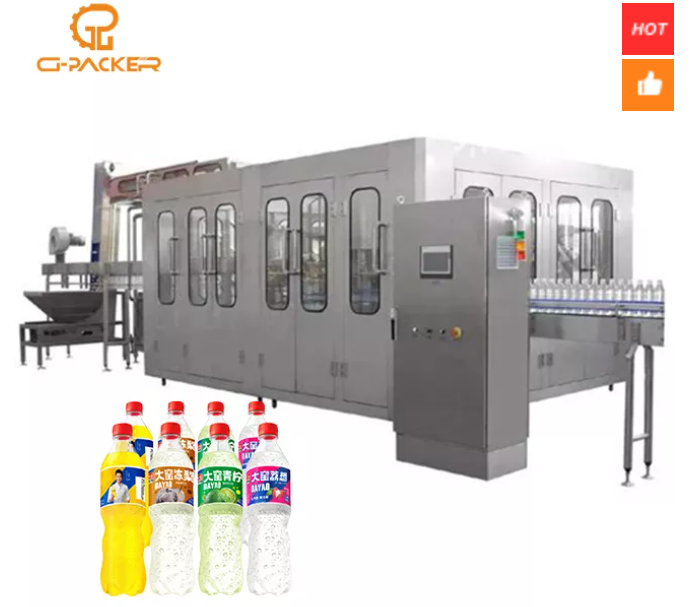
Carbonated beverage filling machines are specialized equipment designed specifically for bottling carbonated drinks, such as soda, sparkling water, and beer. The unique challenges posed by carbonated beverages—such as maintaining carbonation and preventing overflows—require a filling machine that can manage both liquid and gas. In this article, we will explore the working principle of a carbonated beverage filling machine, its operation, and how it compares to other types of filling machines, such as Glass Bottle Filling Machines, Beverage Filling Machines, Juice Filling Machines, Beer Filling Machines, and Tin Filling Machines.
Working Principle
The carbonated beverage filling machine is engineered to handle the special requirements of carbonated drinks, including maintaining carbonation during filling and preventing spills or overflows. The machine works based on several important principles and mechanisms to ensure efficiency and accuracy in the filling process.
1. Carbonation Preservation
One of the key challenges in filling carbonated beverages is preserving the carbonation. Unlike still liquids, carbonated drinks contain dissolved carbon dioxide (CO2) gas, which creates bubbles and effervescence. If the pressure or temperature is not properly controlled during the filling process, the CO2 can escape, leading to a loss of carbonation.
The filling machine addresses this by filling the bottles under controlled pressure. The process starts by pressurizing the filling system, which helps to prevent the CO2 from escaping during the filling process. In carbonated beverage filling machines, there are typically two stages of filling:
First-stage filling: In the first stage, the bottle is filled with the carbonated beverage up to a specific level. The filling head remains submerged in the beverage, which helps minimize the escape of CO2.
Second-stage filling: After the first stage, the filling machine adjusts the pressure inside the bottle and fills the remaining space with more liquid. The bottle is then sealed immediately to prevent any gas loss.
2. Filling and Pressure Control
To achieve the perfect balance between maintaining carbonation and filling the bottle efficiently, the carbonated beverage filling machine uses a specialized filling nozzle that controls both liquid and gas flow. The filling system relies on advanced pressure and flow control systems to ensure that the liquid enters the bottle at the right rate while preventing foaming or overfilling.
For beer filling machines or soda filling machines, pressure is a critical element. The pressure within the bottle is carefully controlled to match the pressure inside the filling machine. This helps maintain carbonation and ensures the bottles are filled with the correct volume of liquid without causing excessive foam or spilling.
3. Vacuum and Overflow Prevention
To prevent overflow and ensure precision filling, carbonated beverage filling machines often incorporate a vacuum system. This system creates a small vacuum within the bottle to help prevent liquid from spilling out when the filling valve is closed. The vacuum helps equalize the pressure between the machine and the bottle, ensuring that the liquid fills the bottle to the exact level without causing splashes or overflows.
4. Bottle Positioning and Automation
Bottle positioning is another essential part of the filling process. Bottles are automatically loaded onto a conveyor system that moves them to the filling station. Filling machines use sensors and automated controls to detect the position of the bottle and ensure that it is correctly aligned with the filling valve.
Automation in the filling process ensures that each bottle is filled consistently and efficiently. The use of modern filling machines, such as Glass Bottle Filling Machines or Juice Filling Machines, allows for high-speed filling while maintaining accuracy and quality.
Operation and Control
The operation of a carbonated beverage filling machine involves several key steps, from bottle loading to sealing, with each step carefully controlled to ensure smooth and efficient processing. The operation can be broken down into the following stages:
1. Bottle Loading and Conveyor System
Bottles are fed into the filling machine via a conveyor belt. Beverage filling machines are often equipped with an automatic bottle loading system that detects and positions bottles accurately on the conveyor. Bottles are oriented with the opening facing upward so that the filling machine can fill them from the top.
2. Cleaning and Sterilization
Before filling, bottles are often cleaned and sterilized to ensure that no contaminants are present. This is particularly important for Glass Bottle Filling Machines or Juice Filling Machines, where hygiene standards are critical. Automated rinsing and sterilization stations are typically incorporated into the system before the bottles reach the filling station.
3. Filling Process
Once the bottles are cleaned and positioned on the conveyor, they enter the filling station. Here, the carbonated beverage filling machine uses a filling valve to start the filling process. The filling is done under controlled pressure to ensure carbonation is maintained. The machine is designed to fill bottles at high speeds, typically achieving hundreds of bottles per minute depending on the machine's capacity and speed.
4. Sealing and Capping
After filling, the bottles move to the capping station, where they are sealed with caps to prevent contamination and preserve freshness. The Beverage Filling Machine uses an automatic capping machine that places and tightens caps on bottles efficiently. This ensures that the filled bottles are secure and ready for distribution.
5. Labeling and Packaging
In most filling systems, the final stage involves labeling and packaging the filled bottles. Labeling machines are integrated into the system to apply labels with product information, branding, and expiration dates. After labeling, the bottles are packaged in boxes or shrink-wrap to prepare them for shipment.
Comparison: Blow-Fill-Seal Technology
Blow-fill-seal (BFS) technology is an advanced filling method used in packaging industries, including carbonated beverage bottling. This technology integrates three processes—blowing, filling, and sealing—into one seamless operation. BFS is particularly popular in the beverage industry for packaging carbonated drinks and juices.
Differences between Traditional Filling Systems and BFS:
Traditional Filling Systems: In a traditional filling machine like a Glass Bottle Filling Machine or Beverage Filling Machine, bottles are pre-formed and filled using separate machines for filling, capping, and sealing.
BFS Technology: In BFS systems, plastic bottles are created, filled with the product, and sealed in a continuous operation. The bottles are formed and filled under sterile conditions, which is a significant advantage for beverages that require aseptic conditions.
While traditional filling methods still dominate the market, BFS technology is becoming increasingly popular due to its efficiency and ability to maintain product sterility.
Types of Filling Systems
There are several types of filling systems, each designed to suit different product types, packaging requirements, and production scales. Some of the most common types include:
1. Volumetric Filling Systems
This type of filling machine is commonly used for carbonated beverages, as it accurately measures the volume of liquid dispensed into each bottle. Juice Filling Machines often use volumetric systems to ensure consistency in the amount of juice per bottle.
2. Pressure Filling Systems
Pressure filling machines are designed to handle liquids under pressure, making them ideal for carbonated beverages like soda or beer. These machines use pressure to force the liquid into the bottle, ensuring that carbonation is preserved. Beer Filling Machines commonly use this technology.
3. Vacuum Filling Systems
This system is used for filling viscous liquids like oils and syrups. It works by creating a vacuum inside the bottle before filling it with liquid. While not commonly used for carbonated beverages, it is an important technology for Tin Filling Machines used in food and beverage packaging.
4. Aseptic Filling Systems
Aseptic filling systems are crucial for ensuring the hygiene and sterility of the product, particularly in the dairy and beverage industries. These systems fill and seal containers in a sterile environment to prevent contamination. Glass Bottle Filling Machines or Juice Filling Machines often incorporate aseptic filling technology for products that need to be kept free from pathogens.
Conclusion
A carbonated beverage filling machine is a vital piece of equipment in the beverage industry, ensuring that carbonated drinks are filled into bottles quickly, accurately, and with the preservation of carbonation. The working principle of these machines relies on controlled pressure, vacuum systems, and precise filling mechanisms to ensure that each bottle is properly filled while maintaining the quality of the beverage.
Whether you are operating a Glass Bottle Filling Machine, Beverage Filling Machine, Juice Filling Machine, Beer Filling Machine, or Tin Filling Machine, understanding the technology behind the filling process and selecting the right machine for your product is essential. By keeping the machines well-maintained, operators can prevent common issues such as overfilling, carbonation loss, and contamination. As technology advances, newer systems like Blow-Fill-Seal (BFS) are also becoming more popular in the industry, offering improved efficiency and sterility.
Whether you are new to filling machines or looking to upgrade your existing system, understanding how these machines work and the different types available will help you make informed decisions about your production process and ensure the continued success of your filling operations.


