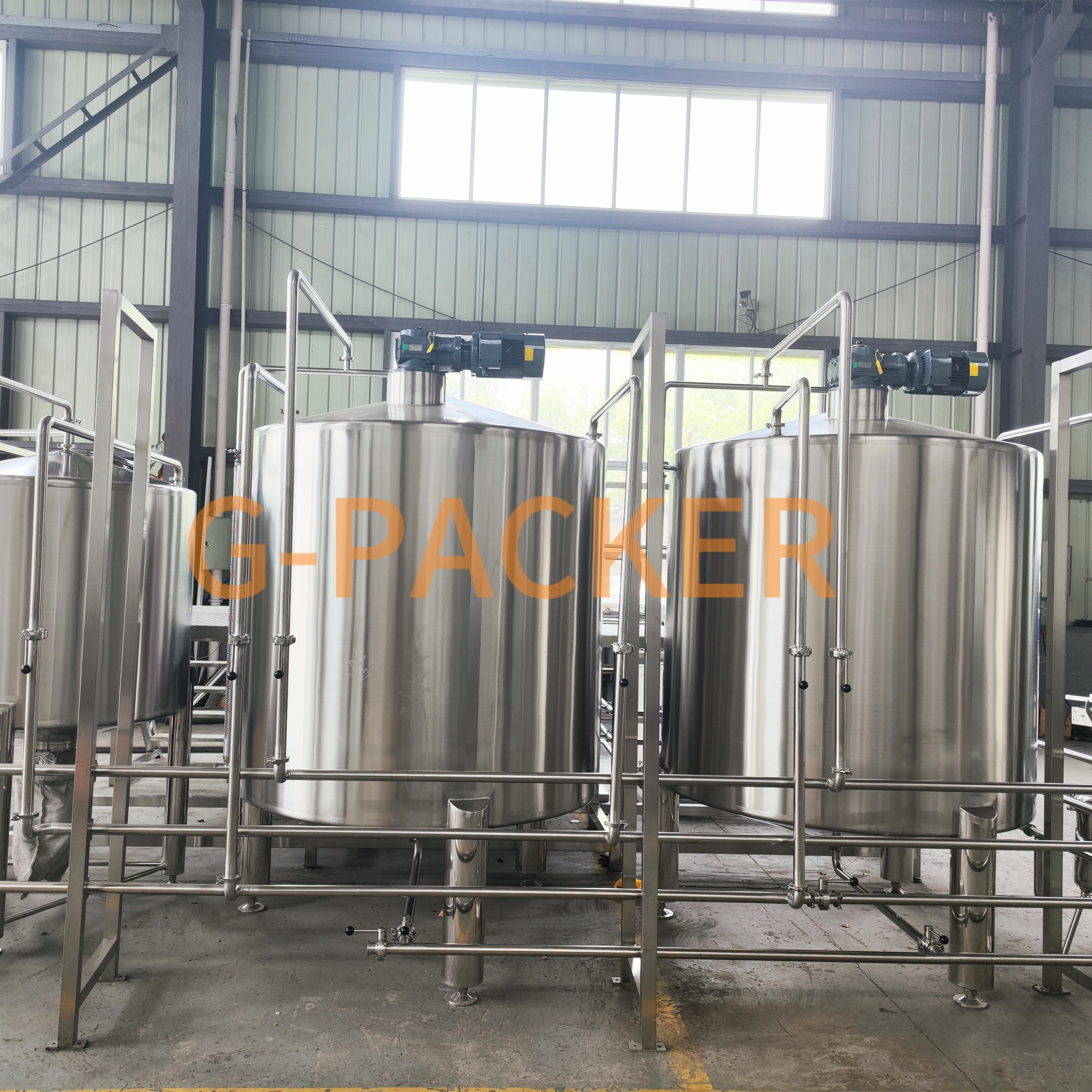
Carbonated soft drinks look simple in a bottle or can—but filling them at scale is a pressure-and-precision balancing act. If the process is too aggressive, CO₂ breaks out of solution, foam erupts, fill levels drift, and product quality becomes inconsistent. If the process is too slow, output drops and costs climb. That’s why modern beverage factories rely on a specialized filling machine designed for carbonated products, and why many producers choose a complete Carbonated Juices Filling Line to keep the entire process stable from mixing to sealing.
Why Carbonated Soft Drinks Are Hard to Fill
Unlike still beverages, carbonated drinks are “live” under pressure. Carbon dioxide wants to escape as soon as pressure drops or temperature rises. During filling, several risks appear at once:
Foaming and CO₂ loss when pressure changes too quickly.
Inaccurate fill levels due to foam occupying volume and collapsing later.
Oxygen pickup that can affect freshness, taste, and shelf stability.
Gushing after sealing if depressurization is not controlled.
The goal is straightforward: keep the drink calm, keep the container pressurized, and seal immediately—without sacrificing speed.
The Core Principle: Counter-Pressure (Isobaric) Filling
The most common method used for carbonated beverages is counter-pressure filling, also called isobaric filling. The idea is to keep the pressure in the container close to the pressure in the filler tank so the liquid enters smoothly and CO₂ stays dissolved.
In practice, a carbonated filling machine works like a “pressure handshake” between the filler bowl and the empty bottle/can:
Pressurize the container with CO₂ before liquid enters.
Fill from the bottom upward to reduce turbulence.
Vent and depressurize in a controlled way to prevent foam breakout.
Seal immediately to lock in carbonation.
Step-by-Step: How a Filling Machine Fills Carbonated Drinks in Bottles
While different manufacturers may use different valve designs or control strategies, most carbonated bottling cycles follow a similar sequence:
1) Bottle handling and preparation
Bottles are conveyed into position and typically rinsed or sterilized depending on the plant’s hygiene design and product requirements.
2) CO₂ purge and pre-pressurization
The filling valve seals against the bottle mouth, then CO₂ enters to purge air and raise internal pressure close to the filler tank pressure.
3) Filling (often fast + slow phases)
Liquid flows in—commonly through a dip tube—so the drink fills from the bottom up. Many lines use a fast fill followed by a slower “top-off” to hit the target level with minimal foam.
4) Controlled venting (“snift”)
After filling, the pressure is reduced in a controlled way. This is one of the most critical steps: too fast and you get foam eruptions; too slow and speed suffers.
5) Immediate capping
Bottles move to a capper where caps are applied quickly to reduce CO₂ loss and keep oxygen out.
This sequence is why carbonated filling isn’t “just pouring.” It’s a carefully managed pressure cycle executed at high speed.
Step-by-Step: How Carbonated Soft Drinks Are Filled Into Cans
Can filling follows the same core physics, but the packaging and sealing method changes. Typical steps include:
Can rinse and purge to reduce contaminants and limit oxygen exposure.
Counter-pressure filling with foam control strategies to maintain a stable fill.
Lid placement and seaming using a can seamer to create an airtight, pressure-resistant seal.
Because cans seal via double seaming rather than caps, line synchronization and sealing integrity become a major focus for quality control.
What’s Inside a Carbonated Filling Machine
To keep carbonation stable while running at production speed, the filling system depends on coordinated control across mechanical parts, pneumatics, and automation. Key elements typically include:
Pressurized filler bowl/tank to hold product under stable CO₂ pressure.
Isobaric filling valves designed for precise pressure control and smooth flow paths.
Vent tubes / gas return paths to manage CO₂ displacement and reduce foaming.
Level control or metering strategy to ensure repeatable fill height/volume.
Automation and sensors monitoring pressure, temperature, speed, and alarms for stability.
In a high-performance beverage plant, the “best” filling machine is the one that consistently hits fill level accuracy, reduces losses, and maintains stable CO₂ volumes across shifts.
Where Carbonation Happens in the Production Process
Most commercial facilities carbonate the beverage before it reaches the filler. This is because controlled carbonation equipment can precisely manage CO₂ dosing, temperature, and mixing conditions. Once the product is stable and conditioned, it becomes far easier to fill consistently under isobaric conditions.
For some niche products or special workflows, carbonation strategies can vary, but the overall goal remains the same: deliver a consistent, cold, properly carbonated beverage to the filling machine with minimal disturbance.
Carbonated Juices Filling Line: What a Complete Line Typically Includes
A Carbonated Juices Filling Line is more than a single filler. It’s a coordinated production system designed to keep carbonation stable from blending through packaging. A typical line may include:
Water treatment and base liquid preparation to ensure stable taste and quality.
Juice/syrup blending with Brix control for consistent sweetness and mouthfeel.
Carbonation unit and buffer tank to stabilize CO₂ volumes and pressure before filling.
Rinse–fill–cap/seam block (monoblock) or modular stations depending on speed and plant design.
Inspection and quality control modules to catch fill level, seal, or packaging defects.
Downstream packaging such as labeling, cartoning, and palletizing.
For carbonated juices, line design matters because juice-based products can foam differently than classic sodas and may require extra attention to viscosity, temperature management, and hygiene routines.
Critical Parameters Operators Monitor During Carbonated Filling
Carbonated filling success comes from stability. Teams typically focus on these core variables:
Product temperature: colder product usually reduces foaming and helps retain carbonation.
Tank and container pressure: pressure mismatches create foam and inconsistent fills.
Fill speed and valve timing: must match product behavior and container type.
Fill level consistency: controlled by calibrated sensing/metering and stable conditions.
Seal integrity: caps or seams must hold pressure reliably.
When these parameters drift, the plant sees it immediately in foam losses, rework, customer complaints, or reduced throughput.
Common Problems During Carbonated Filling and What Causes Them
Even well-designed lines can experience issues. The most frequent problems usually trace back to a small set of root causes:
Excessive foaming
Often linked to warm product, pressure imbalance, turbulent flow, or valve wear.
Flat or inconsistent carbonation
Can be caused by unstable carbonation upstream, CO₂ leaks, slow sealing, or poor pressure control during filling.
Underfill/overfill
Typically related to inconsistent venting, calibration drift, speed changes, or unstable container handling.
Gushing after opening
Frequently tied to uncontrolled depressurization, temperature issues, or poor seal integrity.
A strong preventive maintenance plan and stable process controls are often the fastest path to fewer headaches and higher yield.
How to Choose the Right Filling Machine for Carbonated Soft Drinks
If you’re selecting equipment for a new plant or upgrading an existing line, start by matching the filling system to your packaging and product profile:
Container type: PET, glass, aluminum cans, or mixed formats.
Target speed: required bottles/cans per hour and future expansion plans.
Changeover needs: how often you switch sizes, shapes, or caps/lids.
Product behavior: classic soda vs carbonated juice (foaming tendency, viscosity, ingredients).
Quality features: leak detection, cap torque checks, seam inspection, inline measurement options.
For many producers, a complete Carbonated Juices Filling Line reduces integration risk and improves consistency, because the carbonation system, buffer tanks, and filling machine controls are engineered to work together.
What Different Sources Emphasize About Filling Carbonated Soft Drinks
Reddit ELI5: Highlights the practical “pressurize-then-fill” idea and explains how pressure equalization reduces foam and keeps CO₂ in solution.
Packaging equipment manufacturers: Emphasize integrated rinse–fill–cap configurations, valve design, and stable operation at high speed.
Engineering firms: Focus on the full production flow—water treatment, mixing, carbonation, then controlled filling and sealing.
Process education sources: Stress temperature, pressure control, and consistent carbonation upstream as the foundation for reliable filling.
Industrial animation and canning demonstrations: Highlight line rhythm—rinse, fill, lid placement, seaming—and how fast sealing protects quality.
FAQ: Carbonated Soft Drink Filling Explained
How do bottlers keep carbonation from escaping during filling?
They use counter-pressure filling: the container is pre-pressurized with CO₂ so the drink enters under similar pressure, reducing CO₂ breakout and foam.
Why are carbonated drinks usually filled cold?
Cold liquid holds dissolved CO₂ more effectively and typically foams less, improving fill accuracy and reducing losses.
What’s the difference between isobaric filling and gravity filling?
Gravity filling works best for non-carbonated liquids. Isobaric filling maintains pressure balance, making it suitable for carbonated products that would foam heavily under gravity conditions.
What equipment is included in a Carbonated Juices Filling Line?
Common modules include blending, carbonation, buffer tanks, a rinse–fill–cap/seam block, inspection, and downstream packaging like labeling and packing.
Conclusion: Filling Carbonated Drinks Is a Controlled Pressure Process
So, how is the carbonated soft drink filled? Not by simple pouring—but by a precisely managed pressure cycle that keeps CO₂ stable, controls foam, delivers accurate fill levels, and seals immediately. Whether you’re bottling classic soda or building a Carbonated Juices Filling Line, the right filling machine is the heart of consistency, efficiency, and product quality.


