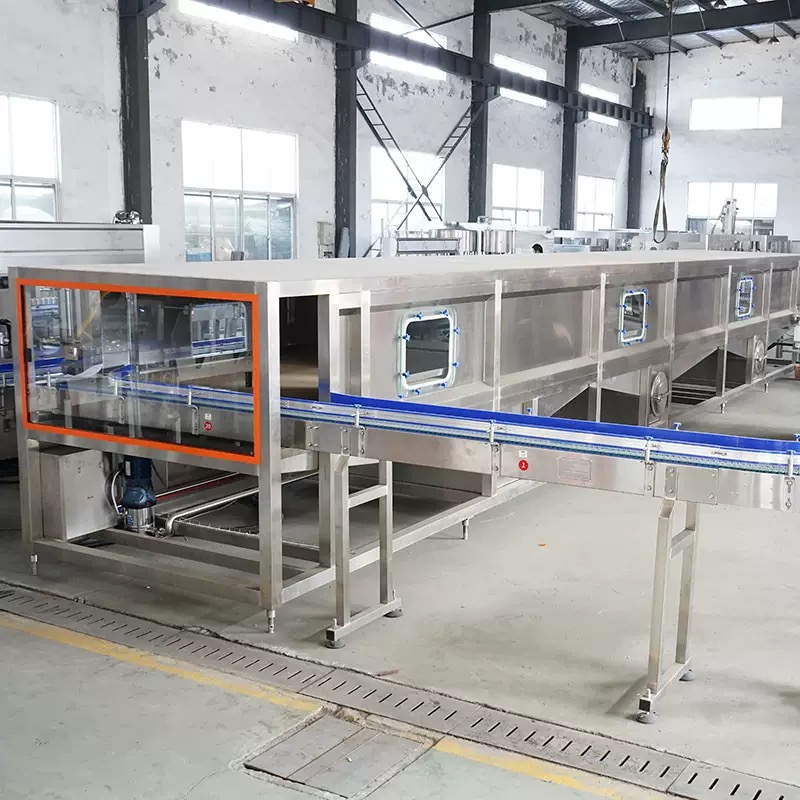
Commercial beverage production requires a zero-tolerance approach to microbial contamination. However, aggressive thermal processing can easily degrade the delicate flavor, color, and aroma of your product. Manufacturers face a constant battle every day. You must protect consumers from dangerous pathogens. Yet you cannot destroy the organoleptic qualities they love.
For packaged beverages, ranging from craft beer to functional juices, in-container pasteurization provides the ultimate safeguard against secondary contamination. Treating the liquid inside its final sealed package eliminates risky exposure points entirely. Flash pasteurization leaves products vulnerable during the filling stage. Tunnel systems remove this gap.
A carefully calibrated Pasteurization Tunnel ensures FSMA-compliant shelf stability without over-processing. You will learn how these systems utilize multi-zone thermal control to guarantee precise lethality. We will explore packaging dynamics, microbial targeting, and operational integration. Ultimately, this guide provides a predictable, scalable method for complete brand protection.
Key Takeaways
Precision Lethality: Pasteurization tunnels utilize multi-zone temperature control to achieve precise Pasteurization Units (PUs), neutralizing pathogens while preserving product integrity.
In-Container Security: By treating the product after sealing, tunnel pasteurizers eliminate the risk of post-fill contamination, a common vulnerability in flash pasteurization methods.
Packaging Versatility: Modern tunnels accommodate a strict product matrix, adapting thermal models for glass bottles, aluminum cans, and specific PET packaging.
The Mechanics of Microbial Control in a Pasteurization Tunnel
Understanding microbial control requires breaking down the physical process inside the machinery. The system moves sealed containers through carefully controlled climate zones. You rely on precise thermodynamics to eliminate spoilage risks.
The Multi-Zone Thermal Process
A continuous spray of heated and cooled water dictates the entire sequence. Engineers divide the internal environment into distinct operational stages. Each zone serves a critical thermodynamic function.
Pre-heating and Heating Zones: Containers enter the machine at room temperature or colder. Spray nozzles apply gradually warmer water. This gradual temperature elevation prevents thermal shock. Glass bottles will shatter if temperatures spike too quickly. Gradual heating ensures safe, uniform energy transfer into the liquid.
Holding Zone (Lethality): The container reaches the target pasteurization temperature here. The system sustains this exact temperature for a specific duration. This duration guarantees the required Pasteurization Unit (PU) accumulation. Pathogens and spoilage organisms die during this critical phase.
Cooling Zones: You must halt the cooking effect immediately after achieving lethality. Rapid, controlled temperature reduction stabilizes the beverage. Step-down cooling prevents negative flavor alterations. It also protects packaging integrity from sudden structural contractions.
Calculating Pasteurization Units (PUs)
Microbial reduction relies on a strict mathematical framework. One Pasteurization Unit (PU) equals one minute of heating at 60 degrees Celsius (140 degrees Fahrenheit). The time-temperature curve dictates total lethality. Higher temperatures require drastically less time to accumulate PUs.
Active PU monitoring systems protect product consistency. Packaging lines occasionally stop due to downstream bottlenecks. Containers trapped inside the holding zone face severe over-pasteurization risks. Modern systems adjust belt speeds dynamically. They modulate spray temperatures automatically during line stoppages. These active interventions prevent ruined batches and ensure exact microbial reduction.
Balancing Quality, Safety, and Flavor Profile
Thermal processing is inherently destructive. You apply heat to kill microorganisms, but heat also degrades desirable compounds. Mastering this balance distinguishes premium beverages from mediocre alternatives.
The Thermal Degradation Challenge
Manufacturers face a realistic risk of "cooked" off-flavors. Excessive thermal loads alter delicate flavor matrices permanently. Color shifts often occur in fruit-based beverages. Natural antioxidants degrade quickly under sustained high heat. You must manage thermal loads strictly to preserve product identity.
Heat Distribution Uniformity
Strategic spray nozzle design ensures perfect thermal distribution. A Pasteurization Tunnel relies on overlapping spray patterns. Consistent water flow rates guarantee identical energy transfer. Every container across the entire belt width must receive identical thermal treatment.
Common Mistakes in Heat Distribution:
Ignoring clogged nozzles on the extreme edges of the belt.
Failing to calibrate water pump pressure periodically.
Running mixed container sizes simultaneously through the same thermal curve.
Targeted Lethality by Beverage Type
Different microbial targets require vastly different PU thresholds. You cannot apply a universal pasteurization recipe. Optimizing the recipe for the lowest safe thermal load protects sensitive flavor compounds actively.
Beverage Type
Primary Microbial Target
Typical PU Target
Flavor Sensitivity Level
Craft Beer
Saccharomyces yeast, Lactic Acid Bacteria
15 - 30 PU
High (Hop degradation)
Low-Acid Juices
Spoilage bacteria, Molds
50+ PU
Medium (Color shifting)
Ciders
Wild yeast strains
20 - 40 PU
High (Aroma loss)
Functional Waters
Environmental pathogens
10 - 20 PU
Low
Shelf-Stability and Compliance Validations
Food safety compliance drives modern beverage manufacturing. Regulators demand verifiable proof of pathogen elimination. You must provide undeniable data supporting your shelf-stability claims.
Regulatory Alignment
Continuous pasteurization data logging supports strict regulatory frameworks. FDA and FSMA guidelines mandate rigorous thermal process tracking. HACCP plans require established critical control points. Modern pasteurizers record water temperatures, belt speeds, and pump statuses continuously. This digital paper trail proves compliance during unexpected regulatory audits.
Mitigating Spoilage Recalls
Product recalls destroy consumer trust instantly. Recalling fermented, bursting cans damages brand reputation beyond repair. Framing the installation of a robust pasteurization process as risk mitigation is essential. You eliminate catastrophic batch spoilage proactively. The equipment acts as an absolute physical barrier against secondary microbial infections.
Extending Ambient Shelf Life
Shelf-stable beverages deliver massive logistical advantages. You can ship products globally without requiring expensive cold-chain logistics. Distributors prefer ambient storage capabilities. Retailers appreciate extended expiration dates. This operational flexibility expands your viable market reach significantly.
Matching Equipment to Your Product and Packaging Matrix
Packaging materials react differently to thermal stress. You must align your mechanical choices with your specific container matrix. Ignoring material science leads to catastrophic structural failures during processing.
Packaging Constraints and Thermal Conductivity
Every material possesses a unique thermal transfer rate. You must adapt heating and cooling zones accordingly.
Glass Bottles: Glass presents a high risk of thermal breakage. It possesses poor thermal conductivity. Glass requires extended, highly incremental heating and cooling zones. Temperature steps rarely exceed 15 degrees Celsius between adjacent zones.
Aluminum Cans: Metal allows rapid thermal transfer. Heat penetrates the liquid almost instantly. This dynamic allows for a shorter overall physical footprint. You can run faster belt speeds safely.
PET/Plastic: Plastic remains vulnerable to severe deformation at high temperatures. Surpassing the glass transition temperature ruins the container. Processing PET requires strict upper-limit temperature capping. You must extend the holding zone duration at a lower peak temperature.
Carbonated vs. Non-Carbonated Dynamics
Carbonation fundamentally changes the physics inside the container. Heat forces dissolved carbon dioxide out of the liquid. Internal pressure builds rapidly inside sealed containers during the heating zone.
Structural integrity checks are an absolute necessity. You must prevent container bursting during the pasteurization process. Aluminum cans might dome outward. Glass bottles might blow their caps. You must match the target lethality temperature against the known pressure tolerance of your selected packaging.
Implementation Realities: Footprint, Utilities, and Integration
Installing a massive industrial processing unit requires careful facility planning. You must evaluate physical constraints and utility infrastructure before making decisions.
Space Requirements
These machines demand significant floor space. A high-throughput system can exceed twenty meters in length. You must address the physical footprint limitations of your existing facility early. Consider ceiling heights, load-bearing floor capacities, and forklift access routes around the machine.
Water and Energy Consumption
Thermal processing requires massive energy inputs. Generating steam and heating water demands robust utility infrastructure. However, modern engineering mitigates these baseline demands.
You must evaluate regenerative water circuits. These systems pump water directly from the cooling zone to the pre-heating zone. Heat exchanged from hot exiting bottles transfers into cold entering bottles. This internal recycling drastically lowers baseline utility demands. Efficiency dictates long-term operational success.
Upstream and Downstream Integration
An isolated machine causes production bottlenecks. You must synchronize the internal belt speed with the filler output perfectly. Downstream labelers and case packers must handle the exact output rate.
Best Practices for Integration:
Install bidirectional accumulation tables before the entrance.
Ensure containers exit completely dry to prevent labeling failures.
Integrate safety sensors to halt the filler if the tunnel backs up.
Evaluating and Shortlisting a Pasteurization Tunnel
Selecting the right equipment requires objective evaluation criteria. You need empirical data to support your engineering decisions. Guesswork leads to inefficient processing and compromised safety.
Defining Success Criteria
Establish clear operational goals before contacting manufacturers. Define your required throughput in containers-per-minute accurately. Identify your target PU for your most resistant product. Measure your maximum allowable physical footprint down to the centimeter.
Chart: Key Evaluation Metrics
Evaluation Category
Specific Metric to Analyze
Why It Matters
Thermodynamics
Verifiable Thermal Mapping
Proves even heat distribution across the entire belt width.
Maintenance
Localized Parts Availability
Prevents catastrophic production downtime during mechanical failures.
Automation
Software Interface Capabilities
Ensures easy recipe creation and automated compliance data reporting.
Key OEM Evaluation Metrics
Demand verifiable thermal mapping and heat distribution modeling. Request empirical testing data directly from the manufacturer. Evaluate the availability of localized parts and emergency service support. Assess their software interface carefully. An intuitive interface simplifies daily recipe creation and ensures automated data reporting functions flawlessly.
Pilot Testing
Theoretical modeling only goes so far. You face an absolute necessity to run sample batches through a manufacturer’s test unit. Pilot testing validates critical flavor retention metrics physically. It proves microbial reduction definitively before finalizing procurement. Always taste the pilot product against an unpasteurized control sample.
Conclusion
Transitioning to an advanced Pasteurization Tunnel dictates both product safety and brand reputation definitively.
Realizing cold-chain independence unlocks entirely new geographical distribution markets.
Consult an engineering specialist immediately to model your specific throughput, packaging, and utility requirements.
Define your optimal configuration today to safeguard your beverage quality for tomorrow.
FAQ
Q: What is the difference between a pasteurization tunnel and flash pasteurization?
A: Flash pasteurization treats the liquid rapidly before filling. This leaves the product vulnerable to contamination during the filling process. A pasteurization tunnel treats the beverage after it is sealed in its final container. This ensures complete sterility of both the liquid and the packaging interior.
Q: How much water does a tunnel pasteurizer use?
A: Older models were highly water-intensive. Modern tunnels utilize regenerative thermal cycles. They reuse water from cooling zones to pre-heat incoming containers. Specific consumption depends heavily on throughput. Evaluating a unit's water recovery system is critical for operational efficiency.
Q: Can a pasteurization tunnel be used for carbonated beverages?
A: Yes. However, because heat increases internal pressure significantly, the containers must be rated to withstand the pressure spike during the holding zone. The tunnel's thermal curve must be engineered specifically for the container's pressure tolerances.
Q: How do you validate that the correct PU has been achieved?
A: Facilities use PU monitors. These specialized data loggers are placed inside a sample container. They travel through the tunnel automatically. These devices record the internal liquid temperature over time. They mathematically calculate the exact accumulated lethality to verify the tunnel's settings.