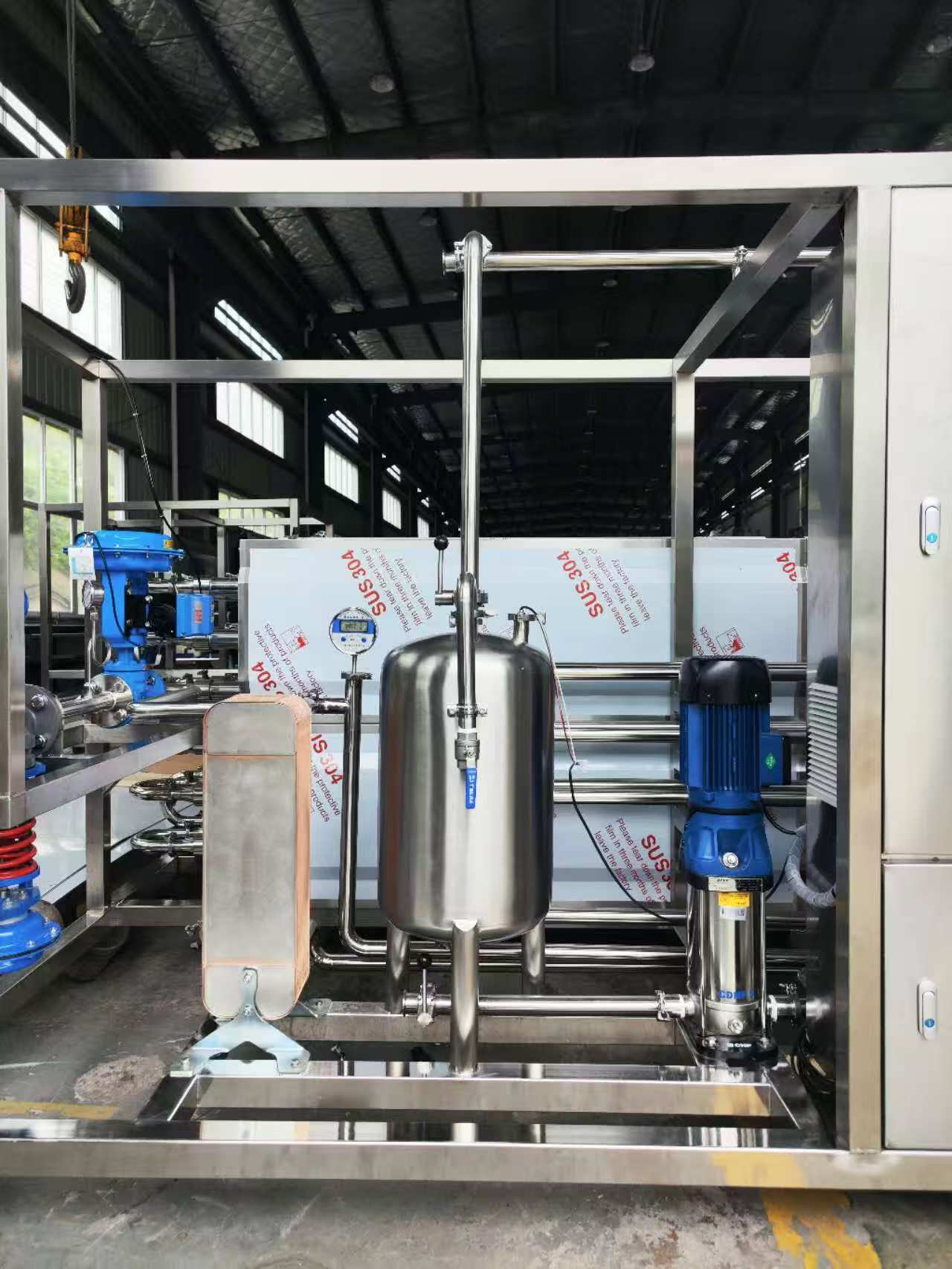
Plant managers and process engineers constantly face a demanding operational reality. They must push production uptime to the absolute limit while strictly maintaining flawless aseptic standards. Every hour of downtime disrupts output and strains facility resources. Indirect UHT systems directly address this rigorous processing challenge. In these thermal configurations, the heating medium never touches your product. Deciding on the right setup heavily depends on product versatility, lifecycle efficiency, and robust energy recovery. Upgrading older equipment requires a careful evaluation of thermal dynamics and mechanical resilience. This guide serves as a pragmatic framework to evaluate and shortlist high-efficiency indirect UHT systems. We will explore critical technological trade-offs and effective integration strategies in detail. You will gain actionable insights to optimize your dairy and beverage processing lines.
Key Takeaways
Operational Trade-offs: Selecting the right indirect UHT system requires balancing initial CapEx against long-term OpEx, particularly regarding CIP (Clean-in-Place) downtime and energy recovery.
Technology Dominance: The tubular sterilizer has emerged as the industry standard for handling varying viscosities and minimizing protein fouling in modern dairy operations.
Compliance & ESG: Modern UHT evaluation must factor in thermal regeneration efficiency (up to 90%+) to align with emerging dairy "Net Zero" sustainability mandates.
Implementation Reality: Successful deployment hinges on upstream/downstream integration—specifically aseptic homogenization and filling line synchronization.
Framing the Upgrade: When to Evaluate Your UHT Processing Line
Operational bottlenecks often trigger the urgent need for new thermal processing equipment. You might observe excessive product burn-on inside your current heat exchangers. Cleaning cycles become frustratingly frequent over time. Throughput drops significantly as intermediate washing consumes your valuable production hours. These clear signs indicate your legacy equipment simply cannot sustain modern production demands. Ignoring these bottlenecks guarantees diminished profitability.
Rapid product evolution actively drives this operational struggle. Traditional milk processing relies on predictable, low-viscosity parameters. Today, consumers demand complex plant-based alternatives. Oat, almond, and soy beverages possess much higher viscosities. They contain starches and fibers. These ingredients stress legacy plate systems heavily. Your plant must adapt to handle these diverse, challenging product portfolios.
You need definitive success criteria before initiating an equipment upgrade. Clear targets ensure a measurable return on your engineering investments. Consider these core benchmarks:
Extended continuous production runs: You should target 20 to 40 hours of uninterrupted processing before requiring a full CIP cycle.
Measurable utility reductions: Total steam and cooling water consumption must drop significantly across your facility.
Flawless product quality: You cannot compromise delicate flavor profiles or essential nutrient retention during the heating phase.
Plate vs. Tubular Sterilizer: Categorizing Indirect UHT Solutions
Categorizing indirect UHT solutions clarifies your available engineering options. Plate Heat Exchangers (PHE) offer a highly compact physical footprint. They demand lower initial capital investments upfront. They provide excellent, rapid heat transfer for clear, low-viscosity liquids. However, they carry significant mechanical drawbacks. PHEs foul incredibly fast when processing heavy dairy proteins. They handle much lower internal pressure thresholds. Their narrow flow channels severely restrict particulate passage.
The tubular option provides distinct, measurable advantages for modern processors. A well-engineered Tubular Sterilizer relies on corrugated or concentric tubes. This specific geometry creates aggressive turbulent fluid flow. Turbulence actively prevents boundary layers from forming against the heated metal surface. This continuous mixing ensures uniform heat distribution. It prevents localized burning of delicate proteins.
These flow mechanics deliver superior performance outcomes for demanding recipes. You can process heavy particulates easily. Fruit juices and fibrous plant milks pass through the system without clogging. The equipment also tolerates significantly higher operating pressures. This pressure tolerance guarantees safer operation during intensive heating cycles.
Admittedly, a Tubular Sterilizer requires a much larger physical footprint. Initial equipment investments run higher than standard plate setups. Yet, you recoup these expenses reliably over time. Extended production run times drastically reduce maintenance wear and daily operational overhead.
Feature
Plate Heat Exchangers (PHE)
Tubular Systems
Physical Footprint
Highly compact
Requires larger floor space
Fouling Resistance
Low (Prone to protein buildup)
High (Turbulent flow prevents buildup)
Viscosity Handling
Limited to light, clear liquids
Excellent for high-viscosity & particulates
Pressure Tolerance
Moderate
Significantly higher
Run Times
Shorter runs between CIP cycles
Extended continuous production (20-40 hrs)
Core Evaluation Criteria for Decision Makers
Decision makers must assess thermal efficiency carefully during the procurement process. You should evaluate product-to-product heat recovery capabilities closely. High-performance systems deliver 85% to 92% thermal regeneration. This metric matters immensely. High regeneration drastically lowers your daily steam and chilled water loads. It captures outgoing heat and pre-heats incoming raw product automatically.
Cleanability directly impacts your daily facility operations and microbiological safety. You must assess the required CIP flow velocities during the design phase. Track the expected chemical consumption rates too. Seek equipment designs eliminating dead legs entirely. Dead legs harbor dangerous bacterial spores. Ensure the manufacturer utilizes certified sanitary welding techniques throughout the entire skid.
Demand compliance certificates for EHEDG design guidelines.
Verify adherence to stringent 3-A Sanitary Standards.
Scalability offers critical future-proofing for your growing brand. Can the system accommodate future capacity increases easily? You might need to add modular tube sections later. Expanding an existing skid is cheaper than buying a completely new unit. Versatility also matters immensely. Ensure you can switch between standard pasteurization and full UHT temperatures effortlessly. You want this thermal flexibility programmed into a single processing skid.
Navigating ESG Mandates and "Net Zero" Dairy Goals
Environmental regulations reshape dairy operations globally. A direct correlation exists between equipment efficiency and your overall plant carbon footprint. Heating and cooling represent the largest utility draws in any dairy facility. Upgrading your thermal processing directly impacts your sustainability metrics. Efficient systems slash scope 1 and scope 2 emissions effectively.
Resource conservation remains a top priority for forward-thinking managers. You must evaluate water usage strictly during cooling phases. Analyze water consumption explicitly during CIP sequences. Every saved gallon improves your sustainability profile. Modern systems utilize closed-loop cooling to eliminate massive wastewater generation.
Always demand rigorous data verification from equipment suppliers. Advise your purchasing team to request empirical case studies. Vendors must show genuine baseline versus post-installation utility data. Do not accept theoretical maximums blindly. Real-world data proves actual environmental impact. Hold manufacturers accountable for their sustainability claims during contract negotiations.
Implementation Risks and Systems Integration
Integrating new processing equipment introduces clear implementation risks. Aseptic boundary management requires intense operational focus. Connecting the heating skid to aseptic buffer tanks demands absolute precision. Sterile air barriers must function perfectly at all connection points. Filling machine synchronization must operate flawlessly to prevent product backups.
Homogenization placement significantly alters the entire system design. Upstream and downstream homogenization present vastly different engineering challenges. Upstream placement handles raw milk well but risks clustering after high heat. Downstream placement creates smoother textures but introduces downstream contamination risks. Your choice impacts the UHT heating section configuration directly. It requires distinct aseptic sealing technologies.
Modern automation requires open-architecture PLC integration. Real-time monitoring prevents disastrous downtime events. Differential pressure drops serve as the primary indicator of internal fouling. Advanced sensors detect these drops instantly. Automated CIP sequencing ensures repeatable, validated cleaning cycles. Manual interventions invite costly human errors.
Do not underestimate the final commissioning phase. Require comprehensive Factory Acceptance Testing (FAT) before shipment. You should use the actual product recipe during this test if possible. A highly accurate chemical simulant serves as an acceptable alternative. Rigorous FAT protocols expose hidden integration flaws before installation.
Shortlisting Vendors and Next-Step Actions
You must model operational return on investment carefully over a five to seven-year horizon. Factor in specialized gasket and seal replacement frequencies. Calculate the exact labor and utility costs of CIP downtime. This comprehensive lifecycle efficiency modeling reveals true financial value. It prevents buyers from fixating solely on initial sticker prices.
Prioritize vendors offering pilot-scale equipment for testing. On-site trials validate thermal impacts on your specific, proprietary recipes. Pilot testing prevents expensive full-scale mistakes. It proves whether a complex oat milk will actually run continuously for twenty hours without burning onto the tubes.
Evaluate remote and local vendor support heavily during your final review. You need rapid access to localized spare parts. Remote diagnostic support prevents minor software issues from becoming major production outages. A strong Service Level Agreement (SLA) guarantees rapid technician dispatch when mechanical failures inevitably occur.
Conclusion
Moving to an advanced indirect UHT system represents a highly strategic asset decision. It goes far beyond simple equipment replacement. This choice redefines your daily production capabilities and operational margins. Mixed-portfolio plants process diverse dairy, complex plant-based, and acidic juice products continuously. For these dynamic environments, a robust tubular solution offers the most resilient operational lifespan.
You secure long-term adaptability by choosing turbulent flow mechanics. Your facility gains the capacity to process increasingly viscous recipes without paralyzing downtime. High thermal regeneration rates insulate your margins against volatile energy markets. We encourage you to request a custom thermal process audit immediately. Allow an experienced engineering team to calculate your specific operational lifecycle value today.
FAQ
Q: What is the typical continuous run time for a tubular sterilizer processing standard dairy milk?
A: Industry benchmarks vary based on protein content and pre-treatment methods. Typically, processors achieve 16 to 24 hours of continuous operation. After this duration, an intermediate clean becomes necessary. Optimal pre-heating and protein stabilization can push these run times toward the higher end of the spectrum.
Q: How does a tubular sterilizer handle high-viscosity plant-based milks compared to plate systems?
A: Plate systems rely on narrow, complex contact points. These points rapidly block when processing fibers or starches. Tubular designs eliminate these tight contact zones. Corrugated channels maintain strong turbulent flow. This geometry aggressively prevents blockage and rapid fouling, making it ideal for oat or almond beverages.
Q: What are the primary maintenance costs associated with indirect UHT systems?
A: Maintenance expenses center on a few key areas. You will routinely replace specialized gaskets and high-pressure seals. CIP chemical usage represents an ongoing consumable cost. Technicians must also conduct routine visual or boroscope inspections. They check heat exchange surfaces for thermal stress or localized pitting.
Q: Can an existing plate UHT system be retrofitted into a tubular system?
A: Retrofitting typically requires replacing the entire thermal heating skid. A full process line overhaul is rarely necessary, but space requirements change. Tubular designs demand a larger physical footprint. You will also likely need pump capacity upgrades to manage the different pressure profiles inherent to tubular flow dynamics.