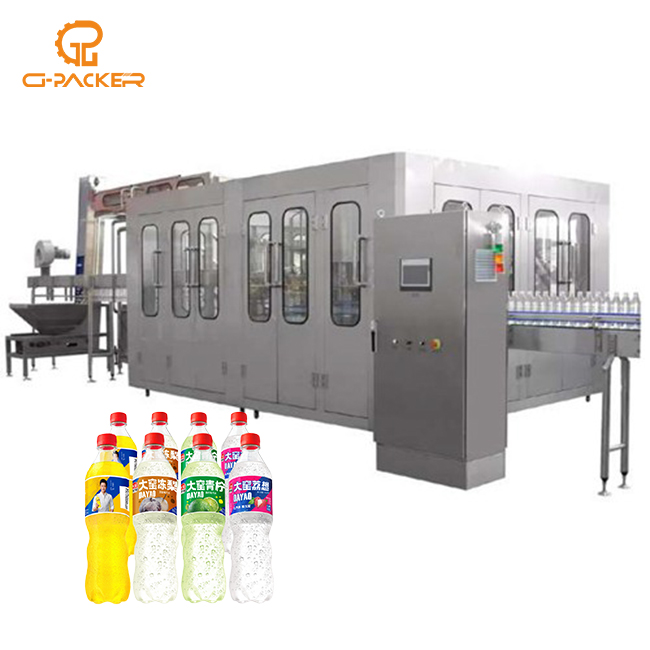
In beverage manufacturing, the phrase “beverage bottle filling machine” sounds simple—until you’re the person responsible for consistent fill levels, product safety, and line efficiency. Whether you’re packaging still water, juice, tea, or carbonated drinks, the right filling machine is more than a piece of equipment. It is the core process step that controls how the product moves from a sanitary supply system into a sealed container with repeatable accuracy.
This article defines what a beverage bottle filling machine is, explains how it works, outlines common types, and highlights how different sources describe the term. Along the way, you’ll also see where the broader term Beverage Filling Machine fits into a modern bottling line.
Definition: What Is a Beverage Bottle Filling Machine?
A beverage bottle filling machine is an industrial filling machine designed to dispense beverage liquids into bottles (and often other containers) with controlled accuracy, stable throughput, and hygienic handling. In practice, it must manage the unique behaviors of beverages—such as foaming, carbonation sensitivity, temperature conditions, and viscosity differences—while keeping contamination risk low.
Some people use “beverage bottle filling machine” to refer only to the filling unit (the part that doses liquid). Others use it as a shortcut for a more integrated Beverage Filling Machine system that may include container rinsing, filling, capping, and basic inspection. The key distinction is scope: a “filler” is a process station; a “bottling line” is an end-to-end system.
Why the Definition Matters in Beverage Packaging
Defining the machine clearly helps you evaluate suppliers, compare configurations, and avoid mismatches between beverage type and filling method. For example, a solution that performs well on still water may struggle with carbonated beverages if it cannot control foam and dissolved CO2 loss. Likewise, a filler that hits speed targets but compromises hygiene or fill consistency can damage brand perception and raise quality risk.
What a Beverage Bottle Filling Machine Actually Does on a Line
At its core, a beverage bottle filling machine performs one job: move beverage product into containers reliably. But in beverage operations, that “one job” includes multiple responsibilities:
Accurate dosing: deliver repeatable fill volumes or fill levels to minimize overfill and reduce giveaway.
Product protection: control splash, aeration, and foam to preserve taste, carbonation, and appearance.
Hygienic transfer: maintain sanitary flow paths and reduce opportunities for contamination during product contact.
Stable throughput: keep the line running at target speed with minimal jams and consistent container handling.
Depending on the design, a Beverage Filling Machine may also be combined with rinsing/sterilization, capping, and basic quality checks—especially in high-speed rotary systems or integrated monoblock configurations.
How a Beverage Bottle Filling Machine Works (Step by Step)
While designs vary, many beverage filling systems follow a similar process flow:
Container infeed and spacing: empty bottles enter on conveyors and are aligned, separated, and stabilized for the filling zone.
Optional rinsing or sanitizing: some lines rinse bottles with filtered water, air, or sanitizing media depending on product requirements.
Filling: the machine dispenses beverage through filling valves/heads according to a chosen measurement or control principle.
Drip control and bottle release: nozzles or valves reduce dripping and stringing, then bottles exit the filling carousel or inline station.
Capping/sealing: caps, lids, crowns, or other closures are applied and torqued/secured.
Downstream steps: labeling, date/lot coding, inspection, and case packing may follow.
The “filling” step is where the definition becomes practical: a beverage bottle filling machine is identified by how it measures and controls the fill, and by the hygienic engineering that supports beverage-grade production.
Key Components You’ll Find in a Typical Filling Machine
Buyers often compare filling machine models by speed, accuracy, and footprint. But the real performance is shaped by core components and how they work together:
Infeed/outfeed conveyors: handle bottle transport and buffering.
Container handling system: guides, starwheels, clamps, or timing screws (depending on machine type) to stabilize bottles.
Product supply and tank: keeps consistent head pressure or flow conditions; often includes level sensing and hygienic fittings.
Filling valves/heads: the heart of dosing—designed for precise control and cleanability.
Control system (PLC/HMI): recipe management, alarms, interlocks, speed coordination, and data logging.
Sensors and safeguards: bottle presence, cap presence, jam detection, and safety interlocks.
Sanitary design features: smooth product-contact surfaces, suitable sealing materials, and cleaning options such as CIP-ready circuits where applicable.
When evaluating a Beverage Filling Machine, focus on the product-contact path, not just external appearance. A well-designed path supports fast cleaning, stable product quality, and consistent fills over long production runs.
Types of Beverage Filling Machine (How the Market Classifies Them)
Search results and supplier catalogs typically classify beverage fillers in three main ways: by beverage type, by filling principle, and by machine layout. Understanding these categories makes the “definition” operational.
1) Types by Beverage Category
Still beverage fillers: commonly used for water, juice, tea, sports drinks, and other non-carbonated products. The machine design often prioritizes speed, hygiene, and low-foam dispensing.
Carbonated beverage fillers: built to manage foam and preserve carbonation, often using pressurized or counter-pressure approaches that reduce CO2 breakout.
Aseptic or high-hygiene systems: used when extended shelf-life, sensitive formulations, or strict contamination control is required. These systems may include advanced sterilization, controlled environments, and validated cleaning routines.
2) Types by Filling Principle
Different filling principles answer different production goals—especially the tradeoff between “fill-to-level” visual consistency and precise volume control.
Fill-to-level (overflow) filling: aims for a consistent liquid level in the bottle, which can improve shelf appearance across slightly variable bottle volumes.
Timed-flow (time-based) filling: dispenses for a set time at a controlled flow rate. It can be effective for certain thin liquids when conditions are stable.
Volumetric filling: measures a target volume per container using flow meters, piston systems, or other metering approaches depending on viscosity and accuracy needs.
Net-weight filling: fills to a target weight using load cells; useful when weight accuracy is prioritized and the process supports it.
Pressure/counter-pressure filling: typically used for carbonated beverages to control foaming and maintain product quality.
Vacuum/negative-pressure concepts: sometimes used in specific applications to help stabilize the fill under defined conditions.
3) Types by Machine Layout
Inline fillers: bottles move along a line and fill in sequence; often simpler to scale for modest speeds and diverse container types.
Rotary fillers: bottles move through a rotating carousel for high-speed, high-throughput production.
Continuous/tracking systems: designed to maintain motion while filling, improving throughput in specific line designs.
4) Types by Automation Level
Manual: operator-driven filling for small batches or testing environments.
Semi-automatic: operator loads/unloads while the machine controls the fill cycle.
Fully automatic: integrated infeed, filling, and often capping, optimized for stable mass production.
What “Good” Looks Like: How to Judge a Beverage Filling Machine
Two machines can share the same “definition” yet deliver very different real-world results. Use these practical metrics to evaluate any filling machine used for beverages:
Fill consistency: stable repeatability across shifts and temperature variations, with minimized overflow or underfill risk.
Control of foam and aeration: especially important for carbonated beverages and foaming products.
Hygiene and cleanability: beverage-grade product-contact design, effective cleaning workflow, and materials suitable for intended cleaning chemistry and temperatures.
Throughput stability: consistent speed without frequent stoppages, plus smooth bottle handling and reliable cap application.
Changeover efficiency: how quickly the machine adapts to new bottle sizes, cap types, or product recipes.
Integration readiness: ability to synchronize with upstream rinsing and downstream capping, labeling, and coding systems.
In other words: a Beverage Filling Machine is not defined only by “it fills bottles.” It is defined by its ability to fill bottles correctly for your beverage and packaging requirements.
How to Choose the Right Filling Machine for Your Beverage Line
If you are selecting equipment, start with the beverage itself and work outward to line targets.
Start with product behavior: carbonation level, foaming tendency, viscosity, particulates (if any), and filling temperature all influence the best filling principle.
Define your packaging reality: bottle material, neck finish, closure type, container volume range, and cosmetic expectations (fill-level “look”).
Set production goals: target bottles per hour, shift pattern, downtime tolerance, and expansion plans.
Plan for hygiene strategy: cleaning frequency, cleaning method, and any required validation—especially for sensitive beverages.
Confirm line compatibility: capping method, labeling approach, and coding/inspection requirements should be coordinated from the beginning.
This approach helps you translate a simple definition into a clear specification—making it easier to compare supplier proposals without relying on vague marketing language.
Benefits of Using a Beverage Filling Machine
Moving from manual filling to a dedicated beverage filling machine usually creates measurable gains:
Higher productivity: stable throughput and predictable output.
Improved consistency: fewer fill-level complaints, fewer rework events, and less product giveaway.
Better hygiene control: reduced risk compared with open handling, especially when designed for beverage-grade cleanability.
Lower operational cost over time: optimized labor allocation and reduced waste from spills and overfills.
For growing beverage brands, these benefits are often the difference between “we can produce” and “we can scale reliably.”
What Different Sources Mean by “Beverage Bottle Filling Machine” (Viewpoints Listed One by One)
Videojet glossary: presents bottle filling machines as a central part of bottling operations, emphasizing product-contact hygiene, cleanability/sterilization, and selecting a filling approach suited to the beverage.
Landpack Knowledge Center: describes filling machines as industrial systems that automate accurate dispensing and classifies them by layout (such as inline or rotary), automation level, and filling method.
Accutek Packaging: highlights that beverage filling varies by carbonation and that different filler styles are commonly used for carbonated vs non-carbonated beverages, including approaches that prioritize fill-to-level appearance for certain drinks.
Sunswell News: frames water filling equipment as hygienic automation focused on speed and precision, often integrated with steps like rinsing and capping in a broader line context.
Makwell blog: focuses on the idea of dispensing a set quantity into bottles and outlines how machines may be configured from manual to fully automatic with multiple measurement approaches.
JIHPump blog: discusses beverage filling equipment as production machinery used for accurate, efficient filling across common beverage packaging formats and use scenarios.
EQS Filling: describes beverage bottle filling machines as automated systems for accurate filling and outlines a broader workflow that can include infeed, filling, capping, labeling, and quality checks depending on the setup.
LinkedIn Pulse author: emphasizes productivity and hygiene benefits and notes that modern beverage filling systems may incorporate cleaning routines and multi-function integration.
Fillers-Packer blog: centers the definition on dispensing specified amounts of liquid into containers to support efficient bottling operations.
FAQ
Is a beverage bottle filling machine the same as a bottling line?
Not exactly. A beverage bottle filling machine is typically the filling station (sometimes integrated with capping). A bottling line includes multiple stages—such as rinsing, filling, capping, labeling, coding, inspection, and packing—working as one coordinated system.
What’s the difference between fill-to-level and volumetric filling?
Fill-to-level systems focus on achieving a consistent visible liquid height in the bottle, while volumetric systems focus on dispensing a measured volume. Which is “better” depends on packaging goals, beverage behavior, and compliance requirements.
What filling approach is used for carbonated beverages?
Carbonated beverages often need a method that controls foam and preserves dissolved CO2. Many producers choose pressurized or counter-pressure strategies to support stable fills at speed.
Can a Beverage Filling Machine handle cans or pouches?
Some beverage filling systems are built for multiple container formats, while others are optimized for bottles. The best approach is to match container format and line design from the start to avoid costly conversions later.
What hygiene features matter most?
Focus on beverage-grade product-contact design, cleanability, and a cleaning strategy that fits your operation. For sensitive products or extended shelf-life goals, higher-hygiene or aseptic-oriented solutions may be required.
Conclusion
A beverage bottle filling machine is an industrial filling machine engineered to dose beverage liquids into bottles with repeatable accuracy, stable throughput, and hygienic product handling. Once you understand the definition in practical terms—beverage type, filling principle, layout, and hygiene strategy—you can select a Beverage Filling Machine that supports consistent product quality and scalable production.


