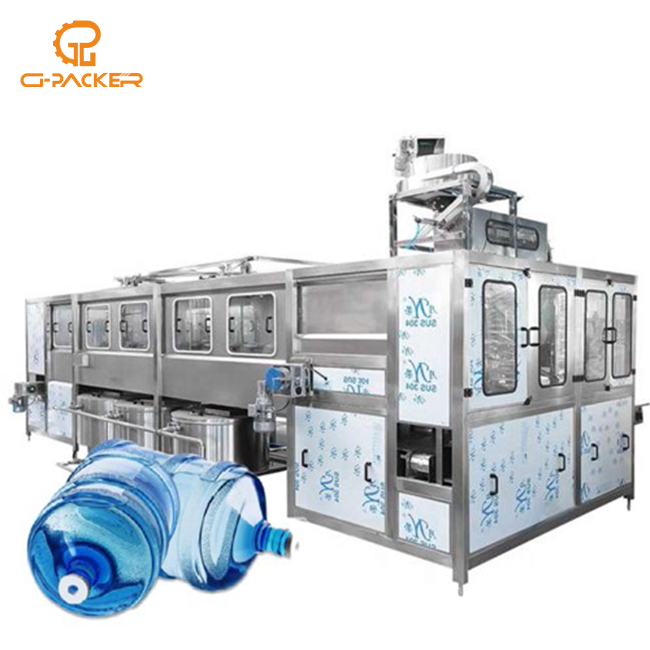
Choosing the right production equipment can make or break a beverage brand’s ability to scale. When orders grow, manual steps and semi-automatic processes often become the bottleneck—creating inconsistent fills, wasted product, slower changeovers, and rising labor pressure. That’s why many manufacturers upgrade to an automatic filling machine: to stabilize quality, increase throughput, and build a line that can grow with demand.
In this guide, you’ll learn why an automatic Beverage Filling Machine is often the smartest move, what it actually does in a modern line, and how to choose a system that fits your beverage type, container range, hygiene goals, and budget.
What an Automatic Beverage Filling Machine Does
An automatic Beverage Filling Machine is more than a single station—it’s typically part of a coordinated bottling or packaging line that moves containers through a repeatable sequence. Depending on your product and plant layout, a typical workflow looks like this:
Infeed & container handling: bottles or cans are aligned, spaced, and transferred into the line
Rinsing or sterilizing (optional): container interiors are cleaned or treated for food safety
Filling: controlled dosing by volume, weight, or level (depending on technology)
Capping or sealing: caps, lids, or closures are applied consistently
Inspection (optional): checks for fill level, cap presence, leakage, labeling readiness
Outfeed: stable discharge into labeling, coding, packing, or palletizing
Compared with semi-automatic equipment, an automatic filling machine is designed to reduce manual intervention—meaning fewer touchpoints, more consistent results, and smoother performance over long runs.
Top Reasons to Choose an Automatic Filling Machine for Beverages
1) Reliable fill accuracy and repeatability
Beverage packaging lives and dies by consistency. Underfill risks customer complaints and regulatory issues; overfill quietly drains your margin. Automatic systems stabilize dosing and reduce variability between operators, shifts, and batches—especially when paired with sensors and closed-loop control.
2) Higher throughput without chaos
The biggest advantage of an automatic Beverage Filling Machine is speed with stability. Instead of “working harder,” the line simply runs faster and more evenly, producing more finished units per hour while keeping rejects and downtime under control.
3) Lower dependence on labor and easier scaling
Labor shortages and training cycles are real operational risks. Automation helps you protect output even when staffing fluctuates. As volume grows, automation also avoids the “people-and-space trap” of adding more operators, more tables, and more work-in-progress inventory.
4) Reduced product loss and fewer messy problems
When filling is inconsistent, you see it everywhere: sticky conveyors, leaking caps, foaming overflow, rework, and lost product. An automatic filling machine helps reduce overfill/underfill events and improves downstream stability—especially important for high-volume beverages.
5) Improved hygiene and food-grade confidence
Beverage production demands cleanability and control. Automation can reduce open handling and repeated container contact, helping you maintain a more sanitary process—particularly when the equipment is built with food-grade wetted parts, smooth surfaces, and cleaning-friendly design.
6) Faster changeovers and broader container compatibility
Many beverage businesses run multiple SKUs: different bottle sizes, cap types, or product variations. A modern Beverage Filling Machine can be configured for streamlined changeovers with adjustable guides, recipes, and quick-change components—helping you protect uptime in mixed-production schedules.
7) Long-term ROI that compounds
Return on investment rarely comes from one factor alone. It’s the combination: less labor pressure, fewer rejects, reduced giveaway, fewer stoppages, and more stable throughput. Over time, a well-chosen automatic filling machine becomes a platform you can build around—not just a tool you run.
Automatic vs Semi-Automatic: How to Decide
Semi-automatic equipment can be a smart starting point when you’re validating a formula, running short seasonal batches, or keeping capital spend minimal. But as soon as volume becomes predictable, quality requirements tighten, or customer demand spikes, an automatic filling machine often becomes the safer choice.
Choose semi-automatic when:
You’re producing small batches or testing multiple formulations weekly
Your output targets are low and labor is consistently available
Budget is constrained and you need a stepping-stone solution
Choose automatic when:
You need stable output and repeatable quality over long runs
Labor availability or training time is becoming a bottleneck
You’re seeing waste from overfill/underfill, leaks, or rework
You’re expanding SKUs and want faster, more predictable changeovers
Quick decision checklist
Volume: target bottles/cans per hour today and 12–24 months from now
Product behavior: foaming, carbonation, viscosity, pulp, temperature sensitivity
Container range: shapes, sizes, neck finishes, cap types
Quality targets: allowable fill tolerance, inspection needs, reject handling
Plant reality: staffing, utilities, cleaning routines, maintenance resources
Key Features to Look For in a Beverage Filling Machine
Not every beverage is filled the same way. Water, juice, dairy, and carbonated drinks each behave differently in a filling environment. When evaluating a Beverage Filling Machine, focus on capability first, then convenience features.
Filling method matched to your beverage
Gravity filling: common for low-viscosity beverages with straightforward flow behavior
Pressure / counter-pressure filling: often used for carbonated drinks to reduce CO₂ loss and foaming
Flowmeter or mass-based control: useful when precise dosing and traceability are priorities
Piston or pump-based filling: often used when viscosity is higher or particulate content requires controlled movement
Control system and repeatable settings
Look for a control approach that supports consistent results across runs—ideally with recipe storage, operator permissions, alarm history, and stable sensor integration. A modern automatic filling machine should help your team run “the same job the same way” every time.
Sanitary design and cleaning readiness
Beverage production often requires frequent cleaning, product changeover sanitation, and strong material compatibility. Prioritize food-grade wetted parts, smooth finishes, safe seals, and a layout that reduces crevices and hard-to-reach zones.
Integration with the rest of the line
Even the best filler struggles if upstream/downstream equipment is mismatched. When specifying your Beverage Filling Machine, consider:
Capper compatibility and closure handling
Conveyor speed control and accumulation strategy
Optional inspection (fill level, cap presence, leak detection)
Labeling/coding interface and line synchronization
Cost, ROI, and the “Hidden” Savings
Buyers often focus on purchase price, but real cost is measured in total operating impact. A well-matched automatic filling machine can reduce several ongoing drains that are easy to overlook:
Giveaway reduction: less overfill means lower product cost per unit
Fewer rejects: stable filling and capping reduces rework and scrap
Labor efficiency: fewer operators per shift and less training dependency
Uptime protection: less stop-and-go production and fewer “mystery” issues
What can increase total cost if ignored
Insufficient maintenance planning (wear parts, cleaning intervals, lubrication)
Underestimating training needs for operators and technicians
Utility mismatches (air, power, water, drainage, temperature control)
Poor changeover design for multi-SKU operations
Common Concerns (and How Smart Buyers Reduce Risk)
Concern: “Automatic equipment is expensive.”
The goal isn’t to buy the biggest system—it’s to buy the right one. Many teams reduce risk by starting with a correctly sized Beverage Filling Machine and designing the line to scale (additional stations, upgraded inspection, expanded packaging automation).
Concern: “We’re worried about maintenance and downtime.”
Downtime is usually the result of preventable issues: improper cleaning routines, neglected wear parts, or mismatched product-to-filling technology. A strong supplier should provide maintenance guidance, recommended spares, and practical training so your team can keep the filling machine running steadily.
Concern: “Our beverage foams or varies—will it still fill consistently?”
Product behavior matters. Foaming, carbonation, viscosity, and particulates all affect filling performance. The solution is proper technology selection (and, when needed, process tuning like controlled flow rates, nozzle design, or filling strategy).
Views From Different Companies and Publications
Below are differing viewpoints from companies and publications that discuss why manufacturers move toward automatic beverage filling. Each perspective is listed as-is (no ranking, no blending).
Liquid Packaging Solution: Highlights automation for improved fill consistency, higher efficiency, and easier day-to-day operation in production.
Multi-Fill: Emphasizes automation as a long-term investment, focusing on robust construction and durability over time.
HAVER USA: Stresses accuracy, faster production, reduced waste, and lower contamination risk as core benefits of automatic filling.
Landpack: Frames automation as a quality-and-cost control upgrade versus semi-automatic workflows, with less product loss and more stable results.
CDA USA: Focuses on how automated bottling supports small businesses through productivity gains and more consistent packaging outcomes.
Apex Filling blog: Discusses how different industries use automatic fillers to standardize output and support scaling across product types.
Manufacturing Tomorrow: Presents automated beverage filling as part of an end-to-end packaging solution, emphasizing system-level integration.
All-Fill: Explains the decision logic between semi-automatic and automatic systems, often linking the choice to volume and operational goals.
ACE Filling: Positions automated water and beverage filling around speed, hygiene, consistency, and scalability for future expansion.
Tech-Long: Summarizes automation as a way to boost efficiency and consistency while supporting modern beverage production requirements.
FAQ: Automatic Beverage Filling Machine
What beverage types are best suited for an automatic filling machine?
Most beverage categories can benefit—water, juice, dairy, sports drinks, tea, and carbonated beverages—so long as the filling method matches product behavior. The key is selecting a Beverage Filling Machine designed for your beverage’s foaming, carbonation, viscosity, and hygiene needs.
How do I estimate the right capacity (bottles per hour)?
Start with your required output per shift, then account for planned downtime, changeovers, and growth. Many buyers size a filling machine not only for today’s orders but for the next 12–24 months to avoid a premature second upgrade.
Is automation worth it for small beverage brands?
Often, yes—especially when quality consistency, labor stability, or retailer expectations become non-negotiable. A compact automatic Beverage Filling Machine can provide professional-grade consistency and reduce waste, even at smaller production scales.
What features reduce changeover time the most?
Recipe-based settings, adjustable guides, quick-change parts, clear calibration marks, and well-designed container handling all make a difference. If you run many SKUs, changeover design can be as important as raw speed when choosing a filling machine.
What maintenance should I plan for?
Plan routine cleaning, inspection of seals and wear parts, lubrication where applicable, sensor checks, and periodic calibration. A dependable supplier should provide a practical maintenance schedule and recommended spares for your Beverage Filling Machine.
Conclusion: When an Automatic Filling Machine Is the Right Choice
An automatic filling machine is the right choice when you need dependable output, consistent quality, and a packaging process that stays stable as demand grows. For beverage producers, the benefits compound: tighter fill control, reduced waste, better hygiene confidence, smoother operations, and a line that can scale with your business.
If you’re evaluating an upgrade, define your beverage type, container range, target output, hygiene requirements, and future growth plans—then select a Beverage Filling Machine built around those realities, not just a headline speed number.


